When people think about artificial intelligence, their minds often wander to Silicon Valley boardrooms or robotic arms in distant factories. What doesn’t get talked about enough is the quiet, often unnoticed influence AI has on the daily pulse of cities like New York. The streets still buzz. The subways still run (more or less on time). But behind all of that is a network of intelligent systems shaping how things move, how people interact, and how services are delivered. The AI Summit London 2025 made one thing especially clear: New York isn’t just using AI—it’s relying on it more than anyone realized.
Smart Isn’t Always Loud: Where AI Hides in Plain Sight
You wouldn't guess that a software model helped ease traffic congestion during last year's Thanksgiving parade. No digital billboard announced it. No media frenzy. But it happened. Traffic light patterns were adjusted in real-time, thanks to AI trained on years of event data, foot traffic metrics, and even weather forecasts. Pedestrian movement was smoother, and cab wait times were shorter. And yet, not one mention in the headlines.
This kind of subtle efficiency runs through many parts of the city. Waste collection, for example, now follows predictive schedules. Bins fill up, not on a timetable, but based on consumption trends gathered through IoT sensors and managed through AI forecasting. This means cleaner streets without sending trucks on wasteful routes. No dramatics. Just fewer overflowing bins.
Even the NYPD has started using AI in their public safety systems—not in the way people fear, with surveillance and facial recognition making the front page—but in minor shifts that quietly make a difference. AI analyzes historical incident data to inform patrol schedules. Officers get dispatched not just faster, but smarter.
AI at the Core of City Planning
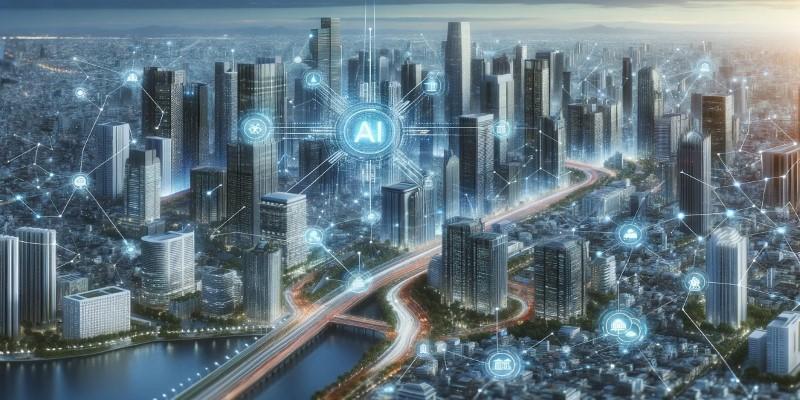
One of the more grounded discussions at AI Summit London 2025 came from city planners who spoke candidly about New York’s use of simulation modeling. AI helps simulate population growth, transit usage, and infrastructure wear and tear—not just for the next year, but for the next two decades. These aren’t guesses anymore. They’re projections based on thousands of data layers.
This affects how neighborhoods are zoned, where new schools are built, and even which intersections get pedestrian overpasses. For example, a recent decision to redesign part of the Brooklyn waterfront wasn’t driven by aesthetic vision but by simulations that revealed flood risks, traffic bottlenecks, and footfall patterns. The result? A space that actually works for the people who use it.
Property developers, too, are leaning into this model-heavy approach. AI tools now help identify what type of housing will be in demand by block and by year. It’s a different kind of planning—less about gut feeling and more about seeing the near future with clarity. All this came into sharper focus during sessions at the summit, where several city representatives shared how they now require AI modeling as part of new project submissions.
Public Services Without the Paper Trails
Libraries, hospitals, and utility companies are gradually being reshaped, not by overhauls, but by back-end changes most New Yorkers never see. And that's exactly the point. One keynote at the summit compared it to invisible oil—it keeps things running, never gets noticed.
Public libraries now adjust operating hours using AI models that forecast foot traffic based on weather, nearby events, and even school exam schedules. It’s a modest example, but the outcome is a better allocation of staff and longer hours where and when people actually need them.
Emergency rooms, meanwhile, are using machine learning to anticipate peak hours and staffing accordingly. This leads to shorter wait times and fewer bottlenecks. The AI doesn't diagnose. It doesn't replace doctors. It simply helps shift resources around the curve instead of behind it.
There’s also been a silent overhaul in public assistance programs. Applicants are no longer bounced from one desk to another. AI chat systems—not the kind that spit out robotic responses, but the ones trained on past human interactions—now handle most of the intake and processing. It’s quicker, less frustrating, and it frees up human caseworkers to focus on actual problem-solving, not paperwork.
What the Summit Didn't Say, But Showed
The AI Summit in London wasn’t short on buzzwords, but beyond the slogans, it revealed something deeper. Cities like New York aren’t waving banners about AI. They’re just getting on with it. The people implementing AI aren’t wearing badges that say “innovator.” They’re the transit planners, the hospital administrators, the systems engineers—people who prefer getting results over getting noticed.
One panel, almost buried in the event schedule, featured a data analyst from NYC’s Department of Education. She spoke for under fifteen minutes, but the impact was clear: AI is helping spot dropout risks months in advance. Not based on grades alone, but on attendance patterns, class participation, and even cafeteria behavior. It’s subtle. It’s predictive. And it’s changing how interventions happen.
There’s a lesson in that. While other cities rush to show how “smart” they are, New York is treating AI less like a badge and more like a tool. A wrench, not a trophy. And that difference is important.
Final Thought
Artificial intelligence doesn’t need to be visible to be effective. In New York City, its most meaningful uses often live in the background—optimizing traffic, streamlining services, and helping the city breathe a little easier. The AI Summit London 2025 may have been hosted an ocean away, but much of its heartbeat came from cities like New York, where the work is quiet, focused, and deeply embedded in everyday life.
The future doesn’t always arrive with fanfare. Sometimes, it slips in through the service entrance.